

List Entry Information
Status
Listed
List Entry Status
Historic Place Category 2
Access
Private/No Public Access
List Number
7344
Date Entered
25th October 1996
Date of Effect
25th October 1996
City/District Council
Wairoa District
Region
Hawke's Bay Region
Extent of List Entry
Extent of registration is part of the land described as Palmerston North-Gisborne Line (NZ Gazette 1944 pp. 986-987 & 1945 p. 1556), Hawkes Bay Land District and the structure known as Kopuawhara Railway Viaduct thereon, and its fittings and fixtures.
Legal description
Palmerston North-Gisborne Line (NZ Gazette 1944 pp. 986-987 & 1945 p. 1556), Hawkes Bay Land District
Status
Listed
List Entry Status
Historic Place Category 2
Access
Private/No Public Access
List Number
7344
Date Entered
25th October 1996
Date of Effect
25th October 1996
City/District Council
Wairoa District
Region
Hawke's Bay Region
Extent of List Entry
Extent of registration is part of the land described as Palmerston North-Gisborne Line (NZ Gazette 1944 pp. 986-987 & 1945 p. 1556), Hawkes Bay Land District and the structure known as Kopuawhara Railway Viaduct thereon, and its fittings and fixtures.
Legal description
Palmerston North-Gisborne Line (NZ Gazette 1944 pp. 986-987 & 1945 p. 1556), Hawkes Bay Land District
Why is this place significant?
Historic Significance
Historical Significance or Value This historic place was registered under the Historic Places Act 1993. The following text is from the original Recommendation for Classification report considered by the NZHPT Board at the time of registration. Historical: The Waiau Viaduct is a component of the Napier Gisborne railway-a major regional line built between 1911 and 1942. This was one of the last major links in the national railway system.
Physical Significance
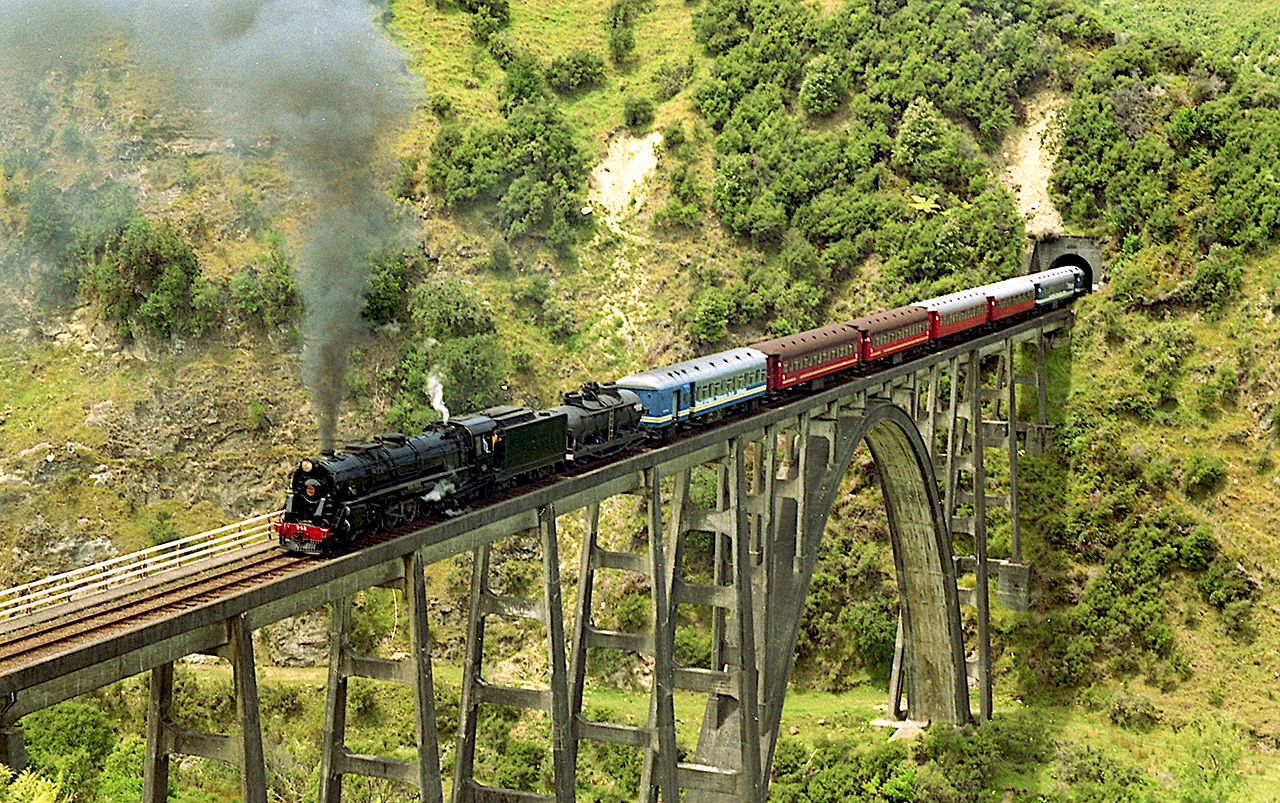
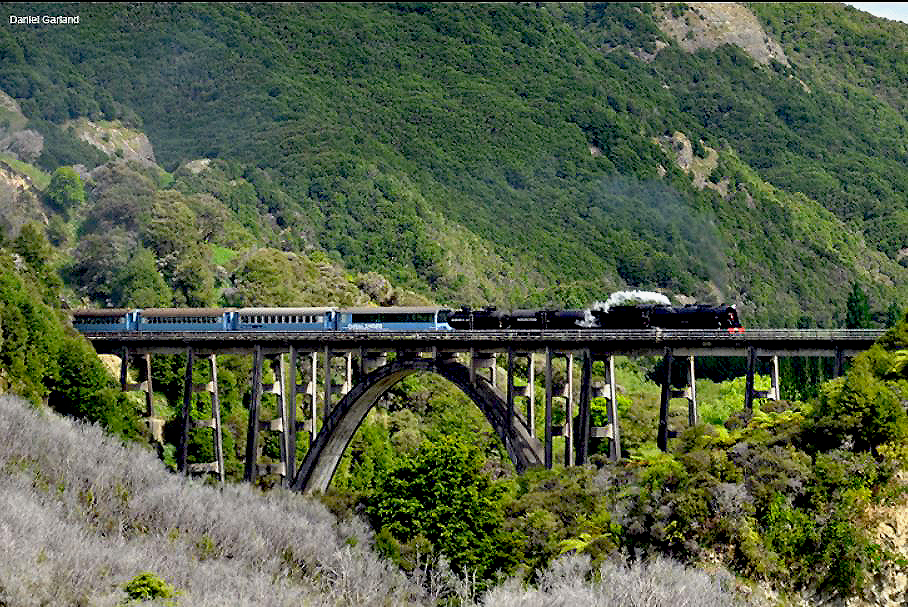
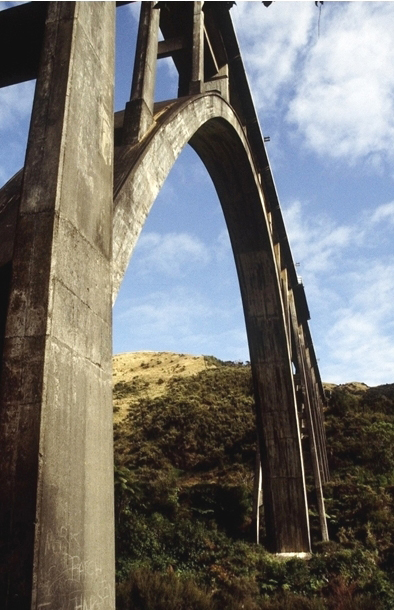
This historic place was registered under the Historic Places Act 1993. The following text is from the original Recommendation for Classification report considered by the NZHPT Board at the time of registration. Aesthetic: The Waiau viaduct is an outstanding visual structure in the local landscape. Architectural: This impressive engineering structure has a very large open spandrel parabolic arch and the counterpoint of girder spans on either side, all are supported on graceful tapered trestle piers. It is a noteworthy example of reinforced concrete design. Technological: The structure was sophisticated for its time, incorporating advanced technology in seismic resistance through the use of continuous spans and completely monolithic construction.
Why is this place Category 1 / Category 2?
Detail Of Assessed Criteria
This historic place was registered under the Historic Places Act 1993. The following text is from the original Recommendation for Classification report considered by the NZHPT Board at the time of registration. (a) The extent to which the place reflects important or representative aspects of New Zealand history: The provision of transport services is a key element in New Zealand's history and Gisborne was one of the last cities to be connected to the national railway system. This viaduct, one of several on the 60-mile stretch between Wairoa and Gisborne, is representative of the expensive engineering solutions that railway builders had to devise. (b) The association of the place with events, persons or ideas of importance in New Zealand history: The viaduct is closely associated with the provision of transport services, in this case, the Napier-Gisborne link. The viaduct is associated with the government policy of the First Labour Government in regard to public works-based economic reconstruction. (g) The technical accomplishment or value, or design of the place: This is a design of high quality and the viaduct as a whole has a high visual impact. Designed in 1939 by C.W.O Turner, it was hailed as a splendid work, incorporating advanced technology. The arch has a span of 54 meters and a rise of 29 meters. The maximum height of the viaduct above the stream is 39 meters. Conclusion: Waiau Viaduct, Kopuawhara Valley, Wairoa is recommended for registration as a Category II as a place of historical and cultural heritage significance and value. This impressive engineering structure is a noteworthy example of reinforced concrete design on a railway line that was one of the last major links in the national railway system.
Why is this place significant?
Historic Significance
Historical Significance or Value This historic place was registered under the Historic Places Act 1993. The following text is from the original Recommendation for Classification report considered by the NZHPT Board at the time of registration. Historical: The Waiau Viaduct is a component of the Napier Gisborne railway-a major regional line built between 1911 and 1942. This was one of the last major links in the national railway system.
Physical Significance
This historic place was registered under the Historic Places Act 1993. The following text is from the original Recommendation for Classification report considered by the NZHPT Board at the time of registration. Aesthetic: The Waiau viaduct is an outstanding visual structure in the local landscape. Architectural: This impressive engineering structure has a very large open spandrel parabolic arch and the counterpoint of girder spans on either side, all are supported on graceful tapered trestle piers. It is a noteworthy example of reinforced concrete design. Technological: The structure was sophisticated for its time, incorporating advanced technology in seismic resistance through the use of continuous spans and completely monolithic construction.
Why is this place Category 1 / Category 2?
Detail Of Assessed Criteria
This historic place was registered under the Historic Places Act 1993. The following text is from the original Recommendation for Classification report considered by the NZHPT Board at the time of registration. (a) The extent to which the place reflects important or representative aspects of New Zealand history: The provision of transport services is a key element in New Zealand's history and Gisborne was one of the last cities to be connected to the national railway system. This viaduct, one of several on the 60-mile stretch between Wairoa and Gisborne, is representative of the expensive engineering solutions that railway builders had to devise. (b) The association of the place with events, persons or ideas of importance in New Zealand history: The viaduct is closely associated with the provision of transport services, in this case, the Napier-Gisborne link. The viaduct is associated with the government policy of the First Labour Government in regard to public works-based economic reconstruction. (g) The technical accomplishment or value, or design of the place: This is a design of high quality and the viaduct as a whole has a high visual impact. Designed in 1939 by C.W.O Turner, it was hailed as a splendid work, incorporating advanced technology. The arch has a span of 54 meters and a rise of 29 meters. The maximum height of the viaduct above the stream is 39 meters. Conclusion: Waiau Viaduct, Kopuawhara Valley, Wairoa is recommended for registration as a Category II as a place of historical and cultural heritage significance and value. This impressive engineering structure is a noteworthy example of reinforced concrete design on a railway line that was one of the last major links in the national railway system.
Construction Details
Start Year
1939
Type
Original Construction
Construction Details
Start Year
1939
Type
Original Construction
Designed by: C W O Turner
Designed by: C W O Turner
Historical and Associated Iwi / Hapū / Whānau
Information Sources
Geoffrey, 2001
B Geoffrey, Churchman and Tony Hurst, The Railways of New Zealand: A Journey Through History, Wellington, 2001.
Mahoney, 1987
J. D. Mahoney, Down at the Station: A Study of the New Zealand Railway Station, Palmerston North, 1987
Other Information
A copy of the original report is available from the NZHPT Central region office Please note that entry on the New Zealand Heritage List/Rarangi Korero identifies only the heritage values of the property concerned, and should not be construed as advice on the state of the property, or as a comment of its soundness or safety, including in regard to earthquake risk, safety in the event of fire, or insanitary conditions.
Historical and Associated Iwi / Hapū / Whānau
Information Sources
Geoffrey, 2001
B Geoffrey, Churchman and Tony Hurst, The Railways of New Zealand: A Journey Through History, Wellington, 2001.
Mahoney, 1987
J. D. Mahoney, Down at the Station: A Study of the New Zealand Railway Station, Palmerston North, 1987
Other Information
A copy of the original report is available from the NZHPT Central region office Please note that entry on the New Zealand Heritage List/Rarangi Korero identifies only the heritage values of the property concerned, and should not be construed as advice on the state of the property, or as a comment of its soundness or safety, including in regard to earthquake risk, safety in the event of fire, or insanitary conditions.
Current Usages
Uses: Transport
Specific Usage: Bridge/ Viaduct
Former Usages
General Usage: Transport
Specific Usage: Railway
Web Links
description: Engineering NZ Heritage
url: https://www.engineeringnz.org/our-work/heritage/heritage-records/kopuawhara-railway-viaduct/
Current Usages
Uses: Transport
Specific Usage: Bridge/ Viaduct
Former Usages
General Usage: Transport
Specific Usage: Railway
Web Links
description: Engineering NZ Heritage
url: https://www.engineeringnz.org/our-work/heritage/heritage-records/kopuawhara-railway-viaduct/
